Condition: Very good condition.
Material: Hand-spun wool on cotton foundation
Quality: Good village weave with excellent natural colors
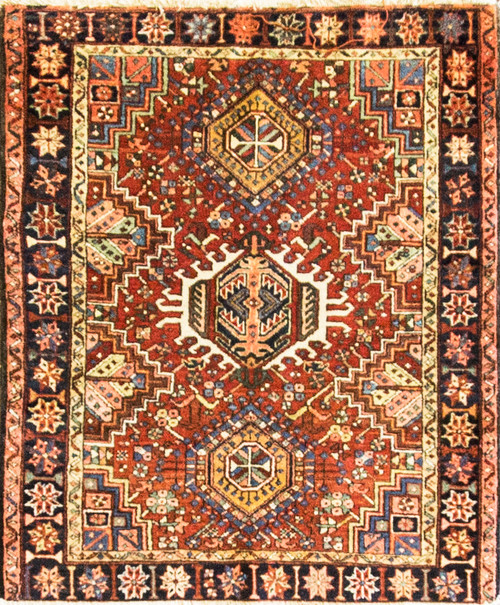
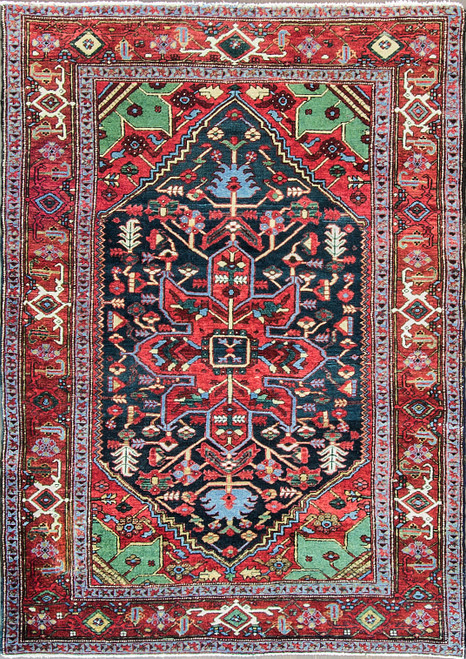
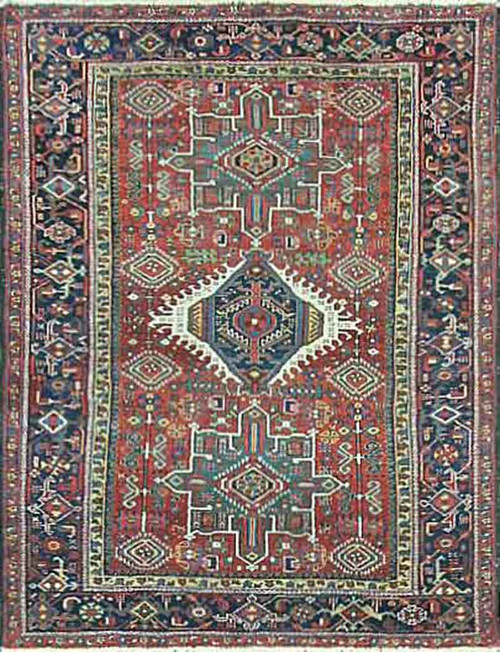
This attractive early 20th-century Persian Karaja rug is a classic example of the weaving traditions of the Heriz district in Azerbaijan, Northwest Persia. The rug displays the highly recognizable Karaja design featuring a bold geometric medallion arrangement set against a rich brick-red field filled with angular tribal motifs, stylized rosettes, latch-hooks, and protective symbols.
The composition is anchored by three striking geometric medallions aligned vertically through the center of the field. The ivory and deep indigo central medallion creates a dramatic focal point, while the surrounding angular forms and tribal ornamentation add energy and movement. The spacious field is enriched with small geometric motifs, creating depth without overwhelming the design.
The color palette is particularly appealing, combining saturated brick red, deep indigo blue, ivory, turquoise, soft green, camel gold, and touches of sky blue. These natural vegetable-dyed colors have matured beautifully over time and remain vibrant and well balanced.
The multiple geometric borders frame the field beautifully, with the dark navy main border providing strong contrast and emphasizing the powerful tribal character of the rug.
Why It Is Special
Karaja rugs are among the most desirable village weavings of Northwest Persia because they combine the strength and geometric character of Heriz rugs with a more refined and artistic village aesthetic. This example possesses excellent drawing, strong color harmony, and a highly decorative layout.
The bold geometric medallions, excellent natural dyes, and authentic tribal character make this rug particularly appealing to collectors and designers. Its relatively uncommon size, attractive proportions, and very good condition further enhance its desirability. The rug retains the warmth, spontaneity, and individuality that collectors seek in genuine village weavings from the early 20th century.
The value is supported by its circa-1910 age, desirable Karaja design, strong decorative appeal, very good condition, attractive natural colors, and solid weaving quality. It is a beautiful and authentic Persian village rug that would work equally well in a traditional collection or a sophisticated contemporary interior.